Double Service
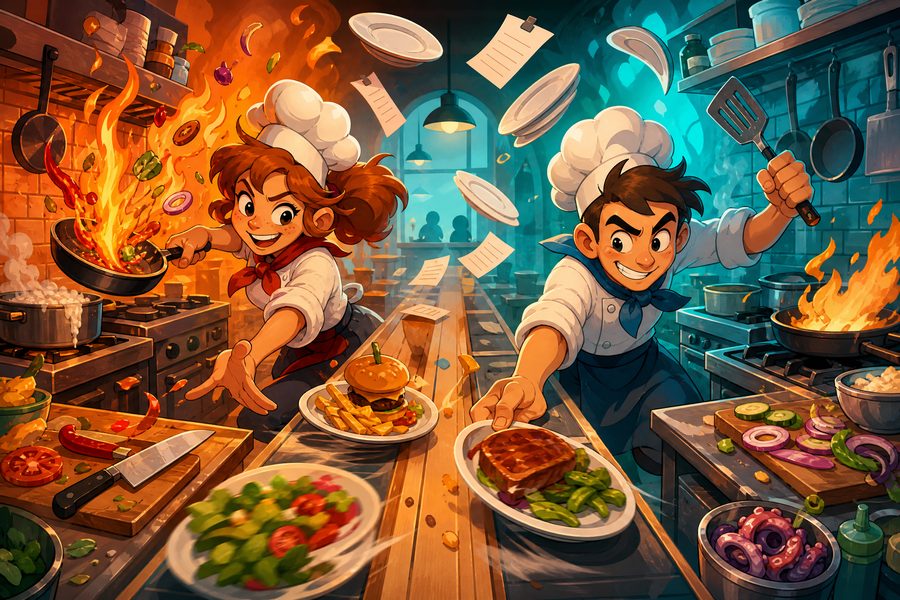
The clearest example we have of a game designed so that shouting at each other is the mechanic rather than a failure of it. Every mistake is visible on screen the instant it happens, which means blame is always fair.
Each entry records the play mode, how many copies and machines are needed, and the score for playing together on one screen. Games we could not test with two people in the same room are not listed at all.
The clearest example we have of a game designed so that shouting at each other is the mechanic rather than a failure of it. Every mistake is visible on screen the instant it happens, which means blame is always fair.
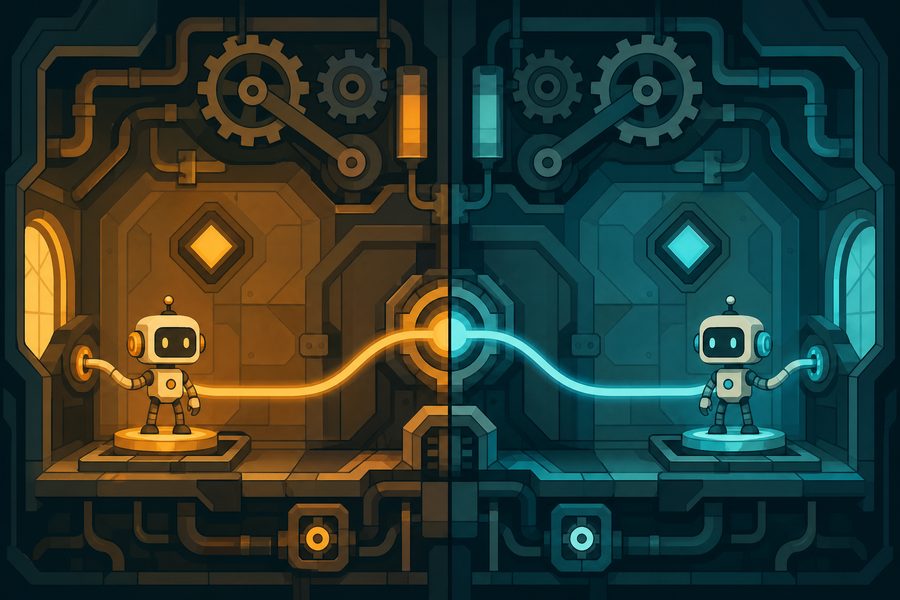
No solo mode exists, and the game is stronger for it. Each of the 48 rooms hides half its information from each player, so progress depends entirely on how well the two of you describe things to one another.
A shared inventory, no timers and no failure state, which together remove almost every reason two people fall out over a building game. Marked down only because the camera follows player one exclusively.
Twenty minutes of this is a delight and an hour of it is a chore, which sounds like a criticism and is really a description of what it is for. Excellent when somebody visits, thin as a game you return to.
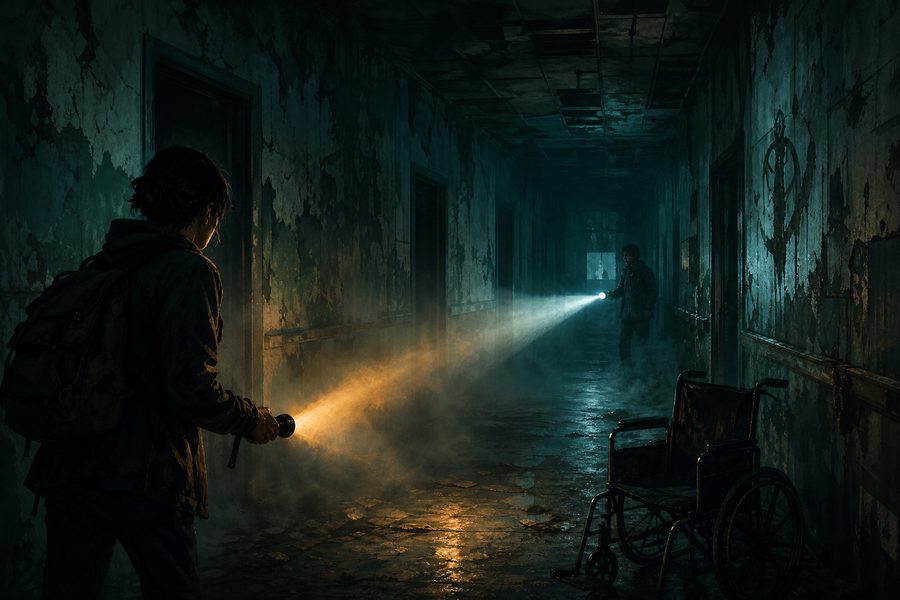
Sharing a room ruins fear and this game knows it, building a co-op mode that is deliberately comic rather than pretending the tension survives. Requires two copies and two machines, which costs it points here.
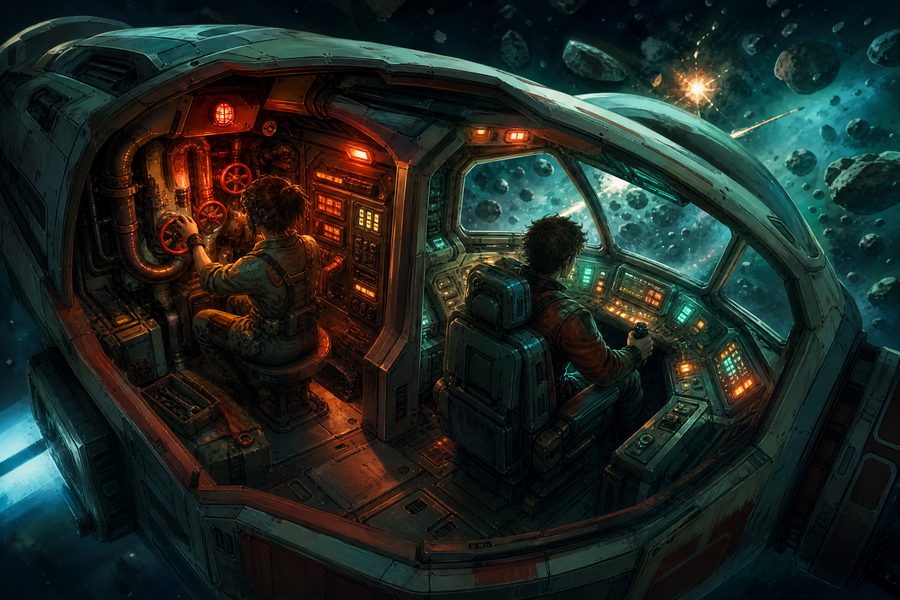
One seat has a view of space and a joystick; the other has valves and a warning light. The asymmetry is the concept, but the two roles are not equally interesting, and the game provides no way to swap mid-run.